Garage Storage for Canadian Winters: How to Plan Cabinets Around Cold, Slushy Months
If you’ve parked in a Canadian garage in February, you know how it goes. Across most of the country, the car rolls in wearing half the road, the slush slides off and turns into a grey puddle, and by March there’s a white crust of salt across the floor. On the west coast it’s rain instead, months of it, so the car comes in dripping and the garage never quite dries out. Whatever storage you put in there has to put up with all of it.
Search for the best garage cabinets for cold climate homes and most of what comes up is people arguing over materials. That’s part of it, sure. But a lot comes down to where you put them. A cabinet sitting right where the car drips is going to have a rougher winter than one up on the back wall.
That’s why this guide to garage storage in Canada starts with the layout, then moves on to winter gear, what to bring indoors and how to plan the space.
Are Custom Garage Cabinets Worth It for Canadian Homes?
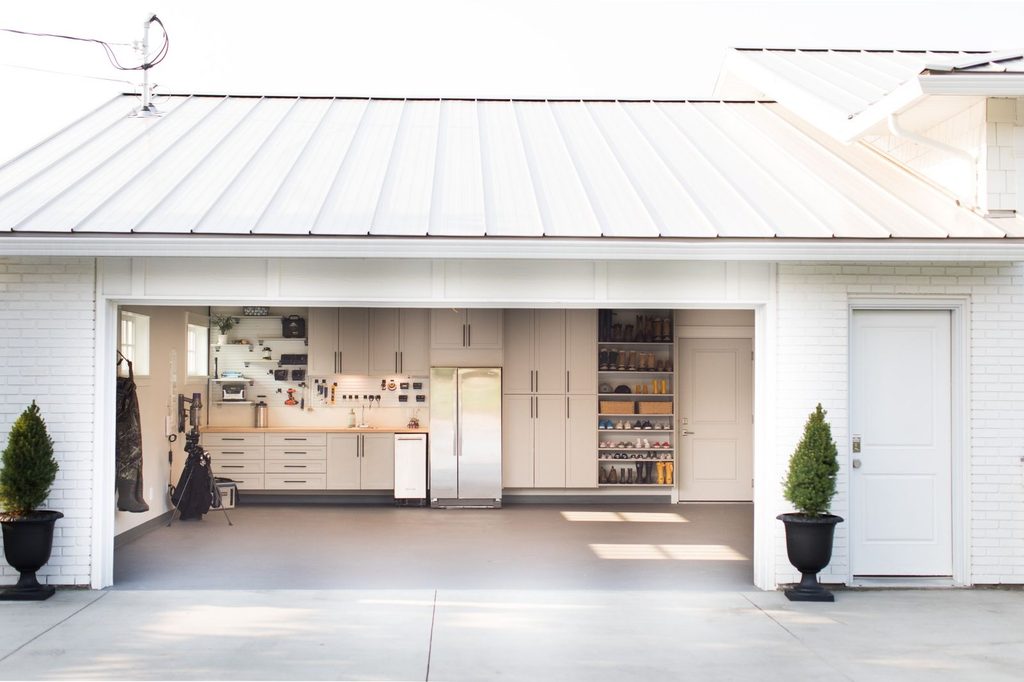
For plenty of families they are, mainly because the garage is where all the seasonal stuff ends up. Hockey bags and skates, the snow shovels, summer patio cushions, a tent nobody’s used since 2019, maybe a set of winter tires leaning on the wall. Without some kind of plan, it drifts onto the floor and stays there.
Custom garage cabinets are made for the walls you’ve actually got, so they can fit around the garage door track, the water heater or that odd corner by the stairs. You can also take them up to the ceiling, which is handy for things you only dig out once a year.
There’s the twice-a-year swap to think about, too. Come spring, the bikes, lawnmower and barbecue tools need to come out. In the fall, it’s shovels, sleds and ski gear. If the storage has a spot for both sets of stuff, that changeover takes an afternoon instead of a whole weekend.
With STOR-X®, a designer measures your garage, plans around what you need to keep there and shows you the layout in 3D before anything’s made. Every piece is cut for your project at our Richmond, BC factory, and your local STOR-X® owner installs it.
Wall-Mounted or Floor-Standing: Which Works Better in a Winter Garage?
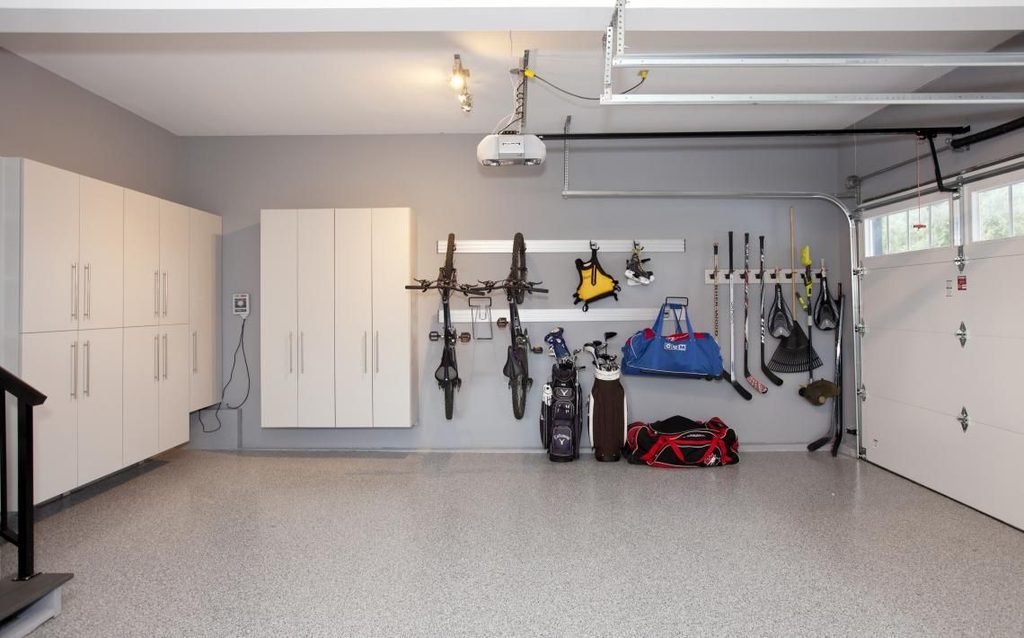
When the floor gets wet every time you drive in, wall-mounted storage can have a real advantage where it suits the space. Your things stay up out of the puddles, and there’s room underneath to push a broom or a squeegee through. What can go on the wall depends on the wall itself, how it’s built and what you plan to store, so your STOR-X® designer will check that first.
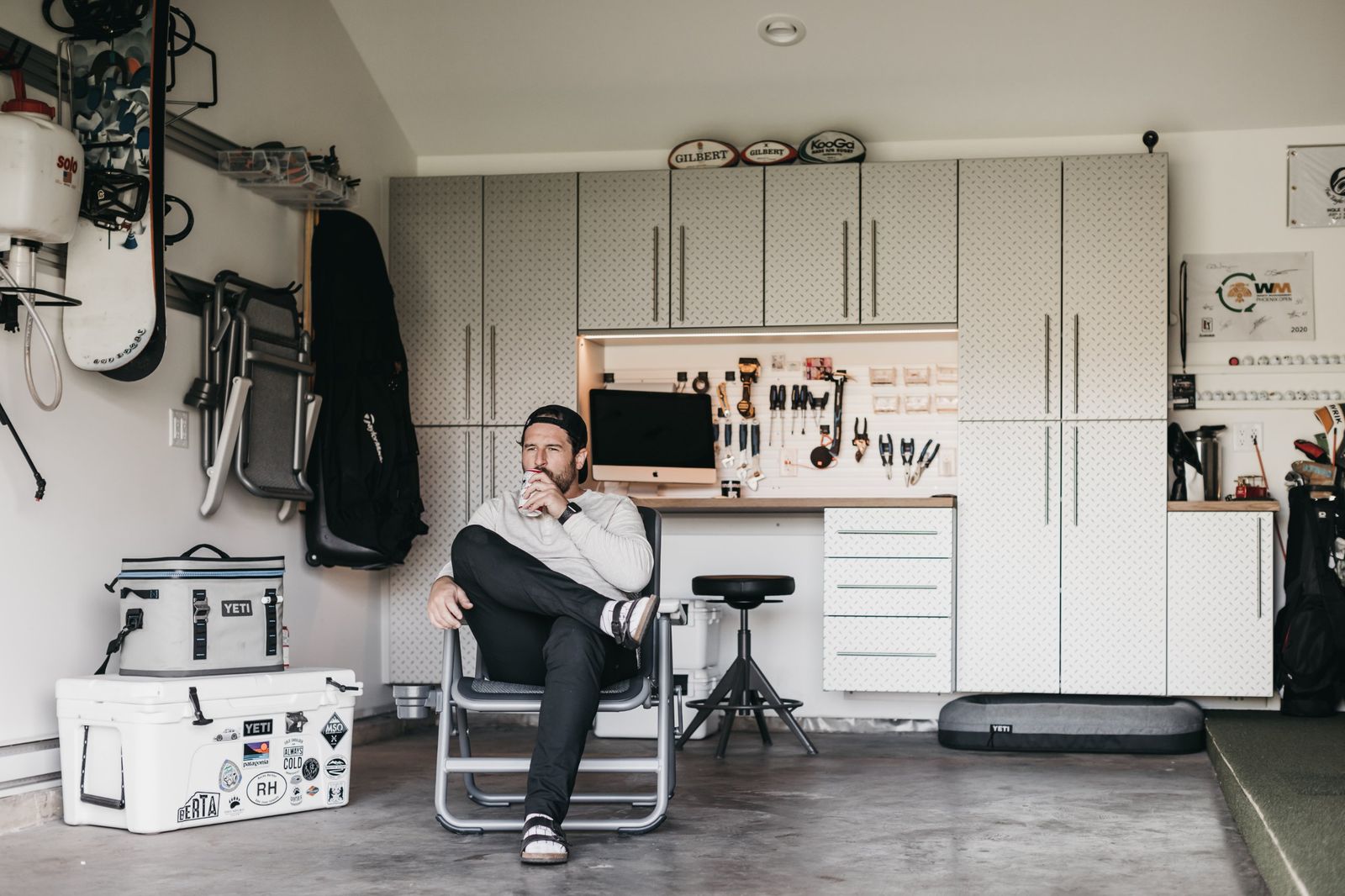
Floor-standing cabinets still have their place, as long as they’re raised on legs to keep them off the concrete. Garage floors are sloped so water can drain, so a cabinet sitting right on the concrete won’t sit level and ends up standing in whatever the car drips. Legs lift it clear and let it sit straight. Tall cabinets on legs are great for rakes, brooms and ski poles. Anywhere the car actually parks, though, wall-mounted storage is the better call. It holds just as much and stays out of the water.
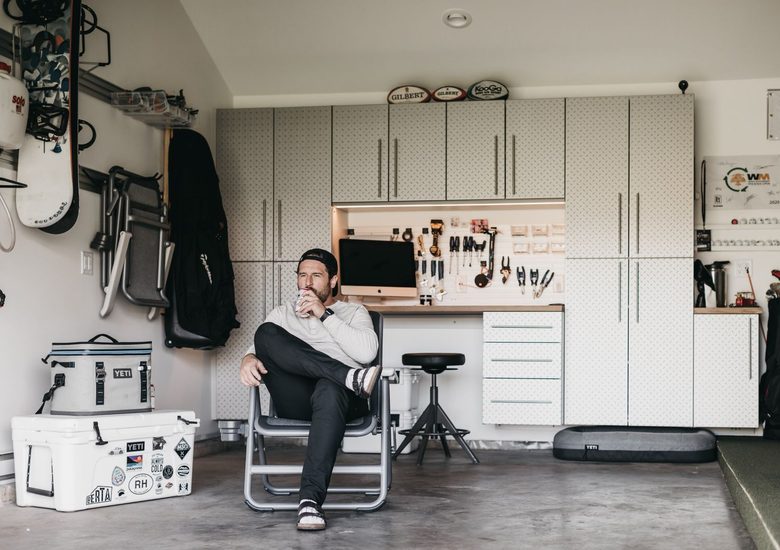
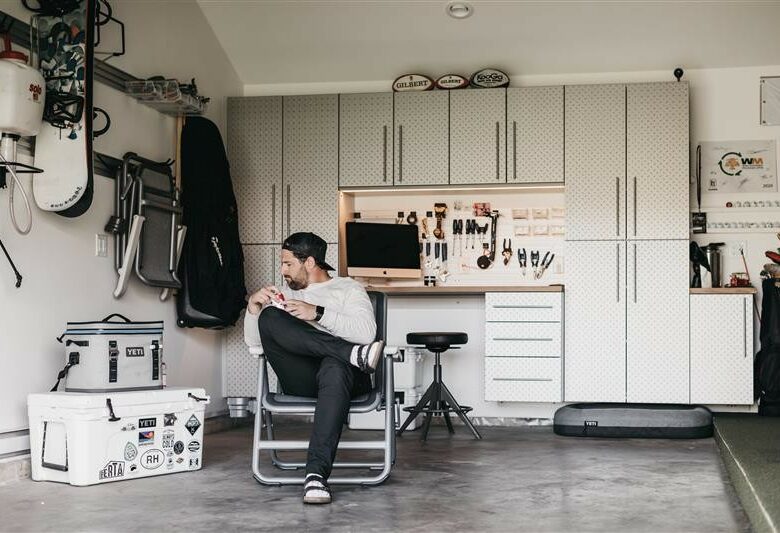
Plenty of garages work well with wall-mounted cabinets along the side where the car parks and taller units on legs at the back, away from the big door. But garages aren’t always used for parking. Take Kaitlin Hargreaves, for example. She turned her garage into a home office, where floor-mounted cabinets worked well because she no longer had to worry about a car bringing in snow, slush or rainwater.
How to Keep Slush and Road Salt Away From Your Garage Storage
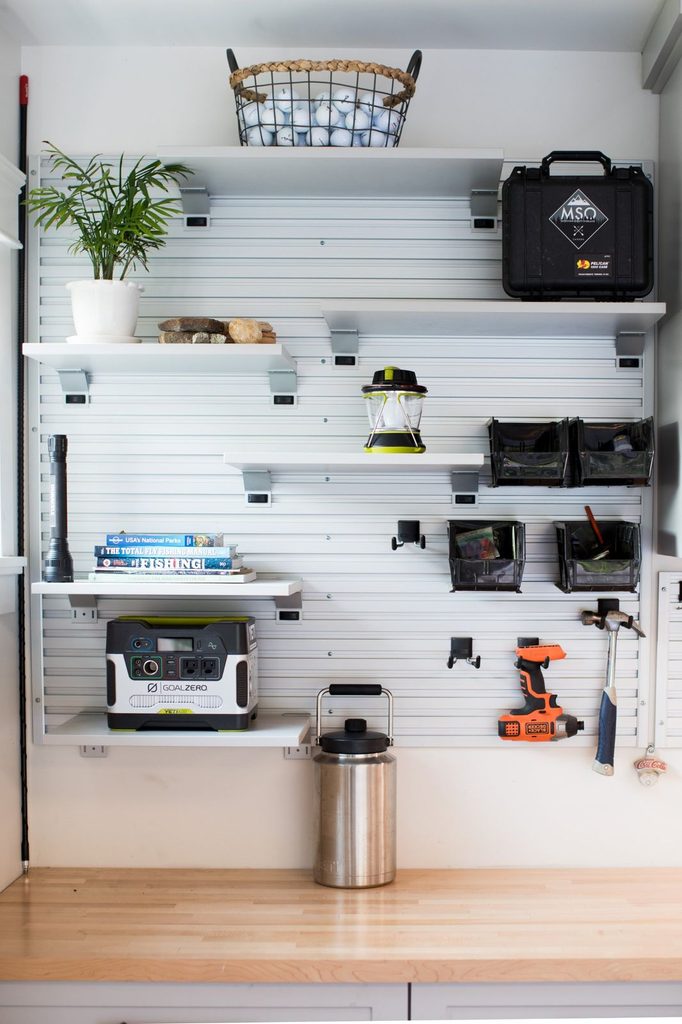
Plan things so the wet stuff and the stored stuff stay apart.
First, figure out where the water actually goes. Usually it’s under the car and by the door into the house, since that’s where everyone kicks off their boots. Keep cabinets out of those spots if you can. And if your floor has a slope, it’s worth noticing which way it runs, because that’s where the meltwater will head.
It also helps to catch the drips early. A rubber mat under the car and a boot mat by the door will hold a surprising amount of slush. Then a quick sweep every week or two keeps the salt from getting tracked all over.
If slush or water does end up on a cabinet, wipe it off with a damp cloth and dry the surface right away. Don’t let liquids or salty slush sit on it, and avoid loading shelves with more weight than they’re built for, especially heavy wet gear. STOR-X®’s warranty doesn’t cover water or heat damage, or damage from too much weight on shelves.
How to Store Winter Gear in a Garage
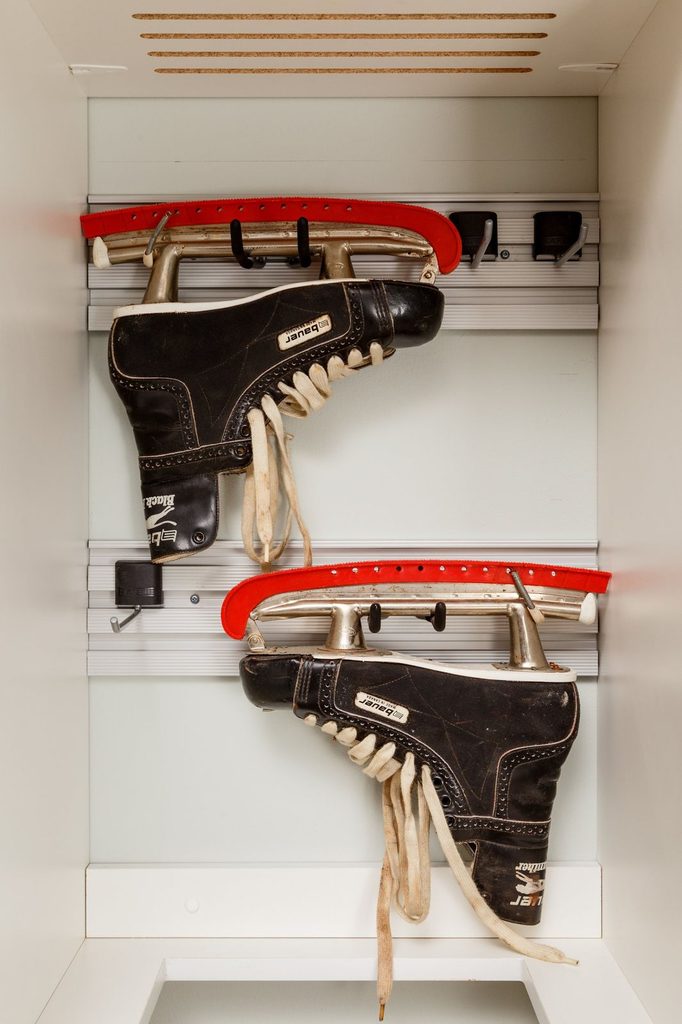
Wet gear by the door. Dry gear further in.
Boots, soggy mitts and snow pants need a spot where they can drip and dry, and the inside of a cabinet isn’t it. A few hooks or an open shelf by the door, with a mat on the floor, does the job. Keep the shovels, ice scrapers and salt bucket close by too, so nobody has to walk slush across the garage to put them back.
Everything that’s dry can go deeper in. Skates, ski bags and hockey gear (once it’s had a chance to air out) can live in cabinets or on adjustable shelves, and the high shelves are good for things you won’t touch until spring, like patio cushions, garden tools and summer toys.
Skis and snowboards are always a bit awkward. A tall cabinet, or a section of wall at the back, can keep them standing upright and clear of the car. If your kids play winter sports, try giving each of them their own spot. That way, the hockey bag nobody unpacked after Saturday’s game has somewhere to go besides the middle of the floor.
Get It Off the Floor with STOR-Trax
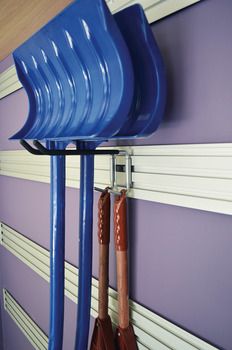
STOR-Trax is an aluminum track that runs along the garage wall, with hooks and accessories that clip on wherever you need them. There are hooks for bikes, fishing rods, garden tools and hoses, plus baskets, bins and trays for the smaller stuff. Everything hangs off the floor, so wet gear can drip and dry instead of sitting in a puddle. When the seasons change, you just move the hooks around.
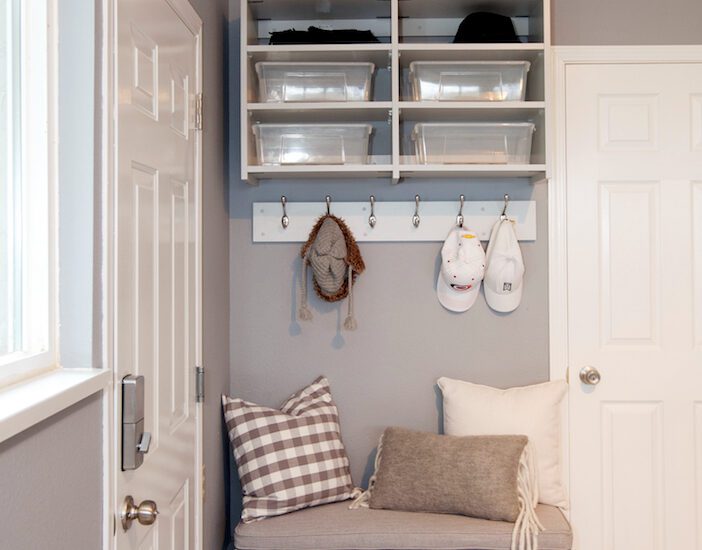
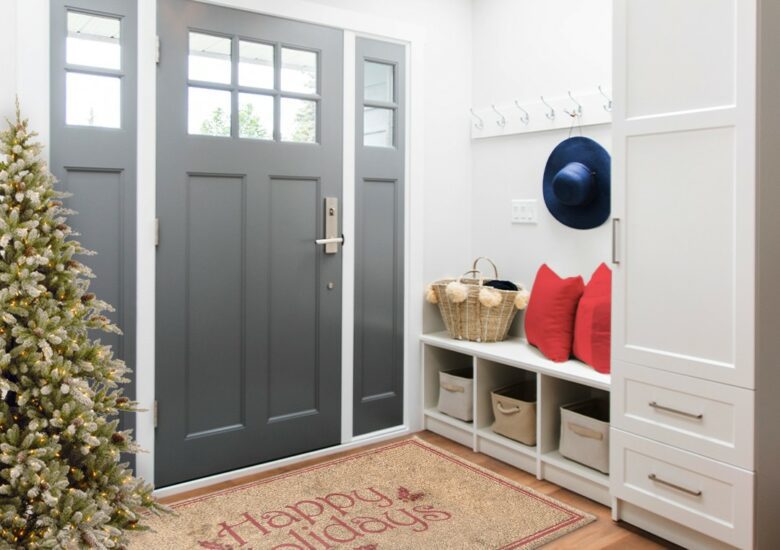
It works just as well in a mudroom, especially if yours is the door in from the garage. Hang wet jackets, boots and sports gear on the wall where they can dry overnight.
What Not to Keep in a Cold Garage Over the Winter
However good your storage is, some things just shouldn’t spend a Canadian winter in an unheated garage.
HomeServe points out that latex paint shouldn’t be kept anywhere that drops below about 10°C, and that pretty much rules out most garages here between November and March. Propane tanks shouldn’t be stored in a garage at any time of year, and electronics hold up better indoors where the temperature doesn’t swing so much. Food is another one to bring in, because it tends to draw mice.
It’s worth checking batteries and cleaning products too, since some don’t like freezing. When in doubt, read the label.
Clearing these out before you plan your cabinets has a nice side effect. You get a much clearer picture of what really needs to stay in the garage, and the storage can be sized around that.
Planning Garage Cabinets for an Unheated Garage
Picture the garage in January. A dry afternoon in June won’t tell you much. Where does the snow melt? Where do the boots come off? Which wall feels coldest when you touch it?
A lot of people start by reading up on garage cabinet materials and end up comparing products that have very little in common. STOR-X® garage cabinets are custom-built wood-laminate systems, with a choice of finishes and hardware, and every system is designed for the space it’s going into. Like any wood-laminate product, they’re not waterproof, which is why placement matters so much. Your local designer can come and look at your garage, talk about how you use it in winter, and put the cabinets in the drier, more sheltered spots.
Here’s roughly what a winter-friendly layout tends to look like:
- Where the wall allows, cabinets or wall storage mounted off the floor along the wall nearest the car.
- A drip zone by the house door, with hooks or an open shelf and a mat under it.
- Taller storage at the back, or on whichever wall is furthest from the big door.
- High shelves for anything you won’t need until next season.
- A clear path from the car to the house, so you’re not squeezing past cabinets with an armful of groceries.
Your STOR-X® designer can assess the space and recommend the right mix of cabinetry, shelving and wall storage for how you use it.
Garage Storage Near You
Local STOR-X® owners design and install custom garage cabinets in Vancouver, North Vancouver, Langley, Calgary, Edmonton and other communities. Your local STOR-X® owner designs it with you, our Richmond, BC team manufactures it, and your local owner installs it.
Book a complimentary consultation, in person or virtual. Tell your designer how the garage gets used in winter, and they can plan for it from the start.
Frequently Asked Questions
Can custom garage cabinets be installed during winter?
Winter’s usually fine, since the whole job happens inside the garage. Your local STOR-X® owner will tell you what they need from you on the day, which mostly means a cleared-out floor and the car parked in the driveway.
How do I protect garage cabinets from road salt, moisture and slush?
Where they sit does most of the work. Keep them away from the spot where the car drips and the spot where everyone kicks off their boots. Throw down a couple of mats, sweep the salt up every so often, and if slush splashes onto a cabinet, wipe it with a damp cloth and dry it. Wood laminate isn’t waterproof, so don’t let water or salt sit on it.
Should garage cabinets be wall-mounted or floor-standing?
Depends a bit on your garage. If the floor’s wet half the winter, wall-mounted storage can keep things up out of the puddles where the wall suits it, and you can sweep right underneath. Floor-standing ones hold more stuff. Plenty of people do both, with wall cabinets along the car side and tall ones at the back. Your designer can tell you what works for your walls.
What are the best garage cabinets for an unheated garage?
There’s no single answer, because every garage gets wet in its own way. The cabinets that cope best are the ones planned for yours: up off the floor, clear of the drips, with wet gear given its own corner. A designer can walk the space with you and sort that out.
What shouldn’t I store in a cold garage?
Bring the latex paint inside, along with any electronics and food. Paint can separate once it freezes, electronics don’t love big temperature swings, and food is basically an invitation to mice. Propane tanks shouldn’t be in the garage at all, winter or summer.
Where should I keep winter boots and wet gear in the garage?
By the door to the house. A couple of hooks or an open shelf, with a mat underneath, and all the dripping happens in one spot instead of all over your cabinets.
Related Articles